Site menu:

Zeppelin to Reopen!

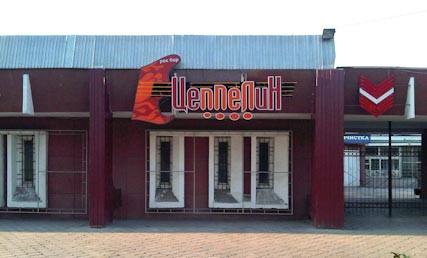
Zeppelin, by day. Expect to see it lit up at night

My favorite Bishkek nightspot, Zeppelin Rock Club, will reportedly re-open September 10. It’s been closed all summer for renovation. I got a bit of a look into the place today and it looks like it will be significantly bigger and greatly improved. Hopefully the “spit n’ sawdust” character of the bar will not give way to the more common and less interesting “spit and polish” of other nightclubs. See you there!

Zeppelin is at 43 Chui Prospect. (Click to view location in Google Maps.)

Week at Lake Issyk Kul

We had a great week visiting Lake Issyk Kul. Issyk Kul is the centerpiece of the biosphere reserve of the same name, and one of the most famous sites in Kyrgyzstan. At more than 5,000 feet above sea level, 113 miles long, up to 37 miles wide, and more than 2,000 feet deep, it is the second largest mountain lake in the world behind Lake Titicaca in South America and the tenth largest lake in the world by volume. Although more than 100 rivers and streams feed into the lake, none come out, resulting in its slight saltiness, and making it the second largest saline lake in the world (by volume) after the Caspian Sea.

William, after a brisk swim

We’ve been to Issyk Kul several times, and enjoyed ourselves each time. Swimming in the cool water surrounded by snow-capped peaks on both shores is a spectacular experience. Early July, though, is too soon to allow the water to warm up much, and it was pretty chilly, this time. Still, we had a great time, and will go back again in mid-August to sample the water again.

Braving some pretty cold water

We stayed this time in the Raduga, a resort just west of Cholpon Ata. We’ve stayed in both Raduga and Kapriz, and both are nice places — very park-like. Cholpon Ata is the most popular destination on Lake Issyk Kul. A small town, there are several major resorts nearby, hotels and pensions in town, and restaurants.

Alex and Aliciya

There are also a few tourist attractions beyond the lake itself. The best is no doubt the petroglyphs. There is a whole field of them on the edge of town. There is also a small but interesting museum. There are a few places to eat in town. Our favorite was the Ribaka, for good fried trout. We went to the Green Pub, but were unimpressed. We were even less impressed with the food at the two resorts we stayed in, so I would suggest you not go the “all-inclusive” way, if your tastes are western. I have been told that the food at the Karven Four Seasons (just west of the Raduga) is much better.

Christina and William at Cholpon-Ata Petroglyphs

Alex and Chris at the Petroglyphs

Traveling to Cholpon Ata

Getting to Cholpon Ata is easy. I’ve attached a gdb file for you to use in your GPS unit or open in Google Earth to get a better look at the route. I’ve also input the whole route into OpenStreetMap, so if you use the OSM implementation on your GPS, you can just use the “follow road” option to create your own route.

Route Map - Click to Enlarge

If you get on Chuy Street and head east, following the signs to Tokmok and Bakakchi you will get there. However, if you want to skip the centers of all the small towns between Bishkek and Tokmok, start your trip by driving north on Almatinskaya to A-365 before turning east. That old highway is being repaired and the parts which are finished make up, without a doubt, the best road in Kyrgyzstan.

Shortly after leaving Bishkek (about 15 miles from the turn onto A-365) you will notice the fences that mark the border with Kazakhstan, which the road follows for quite a ways. Close to Tokmok is an unfortunate gas station which ended up in Kazakh territory. Until recently, it was fenced off from the road, but an accommodation seems to have been reached now, and it was open last time I passed.

The obvious side trip is to the Burana Tower. You turn to the tower shortly before arriving in Tokmok. You can find the description of that route on the Burana Tower page, when I get it up.

After some 70 miles on A-365, you reach a junction at which a road turns up the Chong Kemin River into Chong Kemin valley, the birthplace of Askar Akayev and a destination for trekkers. At this point the road turns south up Boom (Shoestring) canyon. In spring and summer, yurts on the sides of the road in the canyon will sell you refreshing Kumis (fermented mares milk). The trip up Boom Canyon is its own adventure, right now, as the road is being re-built by the Chinese. Some interesting construction techniques are on display. When we passed in July there was one team of workers high up on the scree on the side of the canyon throwing rocks down and causing mini-landslides. I guess the idea was to get down all the loose rock, but that looked like a job which might take centuries.

From the Chong Kemin turnoff, it’s about another 35 miles to Balakchi, where you finally see Issyk Kul. As you reach the town there is a toll booth, charging entrance to the Issyk Kul biosphere. Further on, on the left side of the road, is a fun honey stand with a wide variety of different regional honeys and honey products. Watch for the bear statues.

From the left turn in Balakchi to Cholpon Ata is about another 50 miles along the north side of the lake, with lots of pretty views to be had. Of course, just how far you will be going depends on where you will be staying, as there are resorts and hotels scattered from just beyond Balakchi to Cholpon Ata and beyond.

Kids in Kyrgyzstan!

Alexandra, Christina and William arrived on July 1!

Picnic in the Yurt

The adventures have already started. On July 2, they came with us to the U.S. Embassy 4th of July celebration. It rained a bit, but we had chosen our spot well, and just slipped into the yurt which had been set up on the Embassy grounds.

Posing in front of the yurt

The rain didn’t last too long and everyone had a great time, with music provided by the Air Force Band, in Bishkek for the celebration, playing Latin music.

The next day we were already up in the Ala Too Mountains (the only way to deal with jetlag, after all, is to just power through it).

Christina, meditating

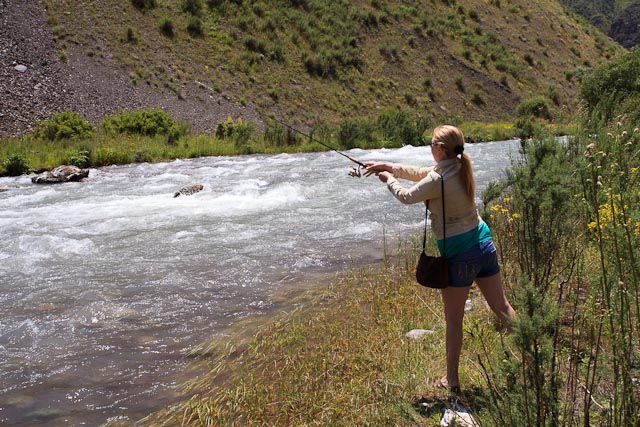
We went up Ak Suu Gorge for a picnic and a little PETA-approved fishing (no catching, just fishing).

Tatyana caught as many fish as any of us

We spent most of the next week at Lake Issyk Kul, where we also had a great time. If I have a few minutes, I’ll put that up next.

Most of the crew (someone always has to be the photographer)

Adigene Valley Loop Hike (and extension)

Trailhead Sign

The Adigene Valley Loop Trail is one of the closest hikes to Bishkek, and yet is an opportunity to get away from it all.  I’m sure it gets traffic on a summer Sunday afternoon, yet the three times I have been up there I haven’t seen a soul.  It runs through woods and meadows, and past the climber’s cemetery.  The loop trail climbs some 2,000 feet to 8,500 feet of elevation at its top, and connects to an unmarked trail which continues up the valley from there.  The loop itself is a 4.1 mile hike, but with the extension I suppose you can make it as long as you like.  I’m told that for the really adventurous, you can cross over into the Sokoluk Valley.

I have provided a GPS file you can use with your GPS or open in Google Earth to get a better look at the route.  I’ve also input the whole route into OpenStreetMap, so if you use the OSM implementation on your GPS, you can just use the “follow road” option to create your own route.

Road to Trailhead - click to enlarge

Getting There

The road to the trailhead is simple, and likely you’ve already driven it.  Just up Ala Archa canyon to the parking lot, on the right side of the road, marked Adigene Valley.  The map above shows the driving route from the corner of Panfilova and Gorkova, but you probably already know that you just need to drive up Mir to the traffic light, take a right.  Take the next major left, and continue on straight all the way.  You pay the park entrance fee at the Ala Archa Gate, of course.  From there, it is another 6.2 miles, for a total of about 20 miles from the U.S. Embassy.  The drive should take you only about 40 minutes.

Typical Scenery

The Loop Trail Hike

From the parking lot you cross the bridge and pass through a relatively flat informal “picnic area.”  Unfortunately, the picnic area is pretty overused and trash-strewn.  There are paths leading every which way, but you just keep going upriver and to the right and you will soon find yourself on the single trail heading up towards the beginning of the loop.

Climber's Cemetery

Your first real choice is when you come to the beginning of the loop, at almost half-a-mile from the trailhead.  If you take the left fork, to the climber’s cemetery, you will make almost half of the remaining uphill portion of the hike (and about a quarter of the total altitude gain of the hike) under the cover of
trees.  If it is a warm, sunny day, that is probably a good idea, since taking the right fork means you will make the full climb completely exposed to the sun.

Trail Map - click to expand

As the trail maps shows, there are several stream crossings.  Most are small creeks and you need not get your feet wet.  The top crossing of the Adigene River is a bridge.  However, the lower crossing is a log which looks very slippery and treacherous to me.  I waded, instead.  You might do well to have some good footwear for water that you could change into for that crossing, to avoid slogging up (or down) the trail with wet feet after that crossing.

Log Crossing

The Extension

The extension of the trail upward does not seem to be marked, and many trails crisscross the alpine meadow above the loop trail.  It really doesn’t matter how you proceed upward, but keep in mind that if you want to continue on past the top of the meadow, you will need to be at the southern end, closest to the river.  At the “Trail” waypoint, the furthest I have been, you come to a gorge which must be crossed, and all the trails come back together, as the only trail across the gorge sets off from that point.

This is a very nice, moderately difficult hike, through classic Ala Archa terrain.  Have fun.

Kel-Tor Lake Hike

Kel-Tor Lake

The hike to Kel-Tor Lake is one of the most rewarding, but strenuous, of the short hikes near Bishkek.  At only about three miles each way, the hike is not long, but the climb of close to 3,000 feet makes up for it – and makes some steep stretches of the trail at least as hard to navigate coming down as they are laborious, going up.

Meadow at Morning

That said, the meadows of wildflowers, pine woods, and glacial lake at the top of your climb will compensate you fully for your efforts.  The trail also features some nice campsites, and perhaps the best way to do this trip would be over a long weekend.

Getting There

Kel-Tor Gorge is the second gorge to the east of Issyk Ata.  It is directly above the village of Kegeti and just this side of the Burana Tower and Tokmok.  The drive to the Jailoo is about 60 miles and takes 1.5-2 hours. The .gdb file can be used in your GPS or in Google Earth to see the route in detail.

Low Road to Kel-Tor - click to enlarge

There are two direct routes to Kel-Tor.  The .gdb file shows the lower route, out Prospect Zhibek Zholu to Ivanovka (23.5 miles from the intersection of PZZ and Shabdan Baatyra Ulitza -Almatinskaya) and then up through the fields to the opening into the gorge, between Yuryivka and Kegeti. Pavement ends about halfway up to the Jailoo, but a vehicle with good ground clearance will get you the whole way.

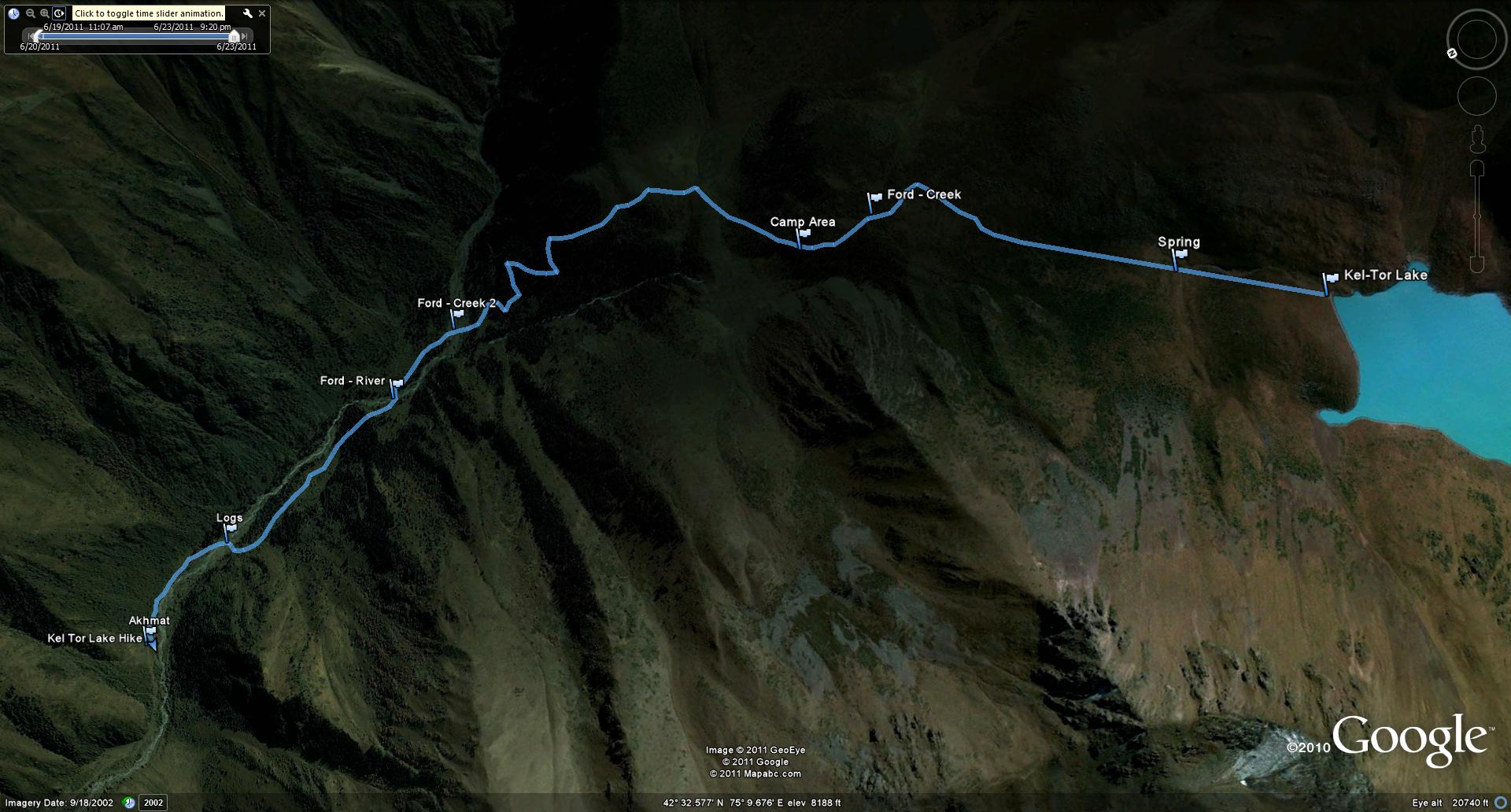
Hiking Route - click to enlarge

The trailhead is at the Jailoo.  I’ve marked it as “Akhmat” in honor of the Oksekhal who has his camp there.  He and his family have been taking up residence at this particular spot for several years now.  He’s very hospitable and friendly, and will no doubt share with you a cup of Kumis, or fermented mare’s milk.  Though I have only had trouble handling my Kumis once, I would rather not be in the wilderness if my stomach goes south on me, so I will think twice before accepting a drink before leaving.  A better bet would be to accept his hospitality on the way back down.  In that sense, you may want to bring along something to share (he suggested to me a trade of Kumis for vodka).  At his behest, I parked in Akhmat’s little camp and left my jeep in his care.

A short ways up the trail is the first river crossing.  Here there are two logs forming a crude bridge.  The water is pretty fast and deep here, so the logs are very helpful.  The second ford is not bridged, but the water is much more spread out here, and a bit of a wade will get you across.  After the second ford, at about one mile, the trail becomes noticeably steeper and switchbacks take you up the side of the mountain.  The trail levels out a bit again after about seven-tenths of a mile.  At about 2.1 miles a very nice set of campsites, scattered down the side of the gorge in thick pines will certainly tempt you, if you are carrying a heavy pack.  This is probably the best option for camping, though there certainly is something to be said about waking up next to the lake.

The Spring

Since the campsite is two-thirds of the way in and also about two-thirds of the way up, you still have another climb of 1,000 ft. to make over the next mile to get to the lake.  The climb is delayed a bit, though, as you wander through some meadows of wildflowers (where the trail can easily be lost).  A beautiful spring flows out of the side of the mountain just before you begin your final assent, so that’s a good place to stop, enjoy the view, and rest up a bit before pushing up the last ridge to the lake overview.

Take a short tour of some of the natural beauty of the area.

Turkistan, From Bishkek

You need a long weekend to visit Turkistan.  In fact, a four day weekend would be ideal.  And spring or fall would be best, as summer is going to be very hot.

Turkistan, lying in South-Central Kazakhstan, is one of the major silk road cities.  Not too far from Samarkand, it is no surprise that some of the architecture from Samarkand and Bukhara bled over into Turkestan.

The Unfinished Mausoleum of Khwaja Ahmad Yasavi behind the Rabii Sultan Begim Mausoleum

Turkestan is not too inaccessible.  Still, it is some 390 miles from Bishkek, so if you are driving yourself, you better like driving.  My suggestion would be to stop at Chimkent on the way to and from Turkestan.  A Turkestan stop is also a reasonable addition to a trip to Tashkent or Samarkand, taking you some 100 miles out of your way (200, round trip).

One of the interesting aspects of Turkestan that sets it apart from Bukhara, Samarkand and Khiva, is its active religious use.  Four pilgrimages to Turkistan are considered by some to meet the requirement for Muslims to travel to Mecca once during their lifetimes.  For that reason, Turkistan is sometimes called the “Second Mecca.”

‘Hazrat-i Turkistan’, the full name of the town, which literally means “the Saint (or Blessed One) of Turkistan” and refers to Khoja Ahmad Yasavi, the Sufi Shaikh of Turkistan, who lived here during the 11th century and is buried in a mausoleum in the town.  Construction of the mausoleum was commissioned by Tamerlane, but he died before it was completed (in 1405) and construction ended then.  The mausoleum still stands uncompleted.

Several other religious buildings were built around the Yasavi mausoleum, including the (completely rebuilt) mausoleum of Rabii Sultan Begim, an underground mosque, oriental bathhouse, and Friday mosque.  All in all, the complex is well worth the trip.

Also, some 30 miles further up the road are the ruins of another Syr Darya Valley town, Sauran.  Mostly just the walls are left standing, but they are certainly worth the 30 minute drive.

The Ancient Walls of Sauran

Getting There

The first leg of the trip takes you to the Aysha Bibi Mausoleum, and is described in my report on that trip.

From Aysha Bibi, continue along the same road, E40, down to Shymkent. Here’s the .gdb file, you can use in your GPS or in Google Earth. Upon reaching Shymkent you will have traveled some 300 miles, and could probably use a rest (we made it to Turkistan in one day, but I probably wouldn’t do it that way again).  What’s more, the accommodations and restaurants at Shymkent are probably superior.

From Aysha Bibi to Shymkent and Turkistan - click to enlarge

If you do spend time in Shymkent, you should probably check out the town of Sayram, which is only a few miles away and is one of the oldest settlements in Kazakhstan (no surprise, then, that the population is mostly Uzbek).  According to the guide book, it is well worth a walk through, but we didn’t make it there.

From Shymkent, it is a straight and easy shot to Turkistan, up M32 about 100 miles.

To the Yassy Hotel, in Turkistan - click to enlarge

Off to the south of the road as you approach Turkistan, are the ruins of Otrar, which we did not visit, but you might.  Keep your eyes out for camels along the road, and as you approach Turkistan, there was a stand selling camel kumis, certainly something we all need to try, at least once.

We stayed in Turkistan in the Yassy Hotel.  According to our guide book, it is the best.  Still, you should not expect spotlessness or luxury.  It was OK, and the location was perfect, but we had to first dispose of the plastic bag with a moldy chunk of bread inside, which was resting on the night table.  We stayed in one of their “premium rooms,” for about $60.

We continued on with our adventure by cutting across country down the Syr Darya valley to Uzbekistan.  I’ll write that up when I get the time.

Aysha Bibi and Babazhi Katun Mausoleums

Aysha Bibi Mausoleum

This is a relatively short trip into Kazakhstan from Bishkek, but would make a challenging day-trip.  It is probably better thought-of as a stopping point on the way to Turkestan or Tashkent.  The mausoleums are about five hours from Bishkek (including border formalities to get into Kazakhstan – your wasted time may vary).

According to Wikipedia (http://en.wikipedia.org/wiki/Aisha_Bibi), Aysha Bibi is an 11th or 12th-century mausoleum for a noble woman located in the village of Aisha Bibi, 18 km (11 mi) west of Taraz, Kazakhstan on the Silk Road. It is locally famous as a monument to love and faithfulness.”  See the whole Wikipedia page for much more detail on the legend surrounding the mausoleums and the constructions, themselves.

Bishkek to Aysha Bibi - click to enlarge

The route is simple and easy.  From Bishkek, take M39 west, the same road that, turning left in Kara Balta, takes you to Osh.  In this case, though, you just continue on straight to the Kazakh border, and then on to the city of Taraz.  The route runs almost due west, dropping about 600 feet at some points in Kazakhstan, and then climbing it again. There is a loop around Taraz to the north (right).  At about 185 miles, you come upon the complex on your left.  You can get the .gdb file here.  Instructions for using it with a GPS are here, and with Google Earth, here.

Besides the mausoleums, there is, according to Wikipedia, a sacred limestone cavern across the road.  We did not find this, perhaps because we didn’t know to look for it.

Mausoleum Detail (and beautiful girls)

Kel-Tor Lake?

This weekend’s camping trip is to Kel-Tor Lake, or perhaps Kok-Moinok Lake.  Not sure, since it’s a complete Google-Earth-based explore.

Routes - Click for bigger image

Osh, One Year On

Anyone who’s spent any time in Osh will have to agree with the sentiment of this article.  Very nicely done.

Linkin Park: Close as They Get?

LP has announced new dates in Asia for September.  Is 4,000 K (Bangkok) the closest they will come to Bishkek, or is there a Moscow date still to be announced in October?  Still, maybe Hong Kong, Seoul, or someplace in Japan are the best bets for a bit of R&R.